

AirSuite™ for housing
Understand how your homes are performing, and make evidence-based decisions to improve tenant wellbeing.
Why it matters
Warm, dry homes are the launchpad for better outcomes
Homes that are properly insulated, heated and ventilated do more than keep people comfortable. They support school attendance, health and employment, and the households most exposed to cold, damp housing are often the ones least able to do anything about it.
The difficulty is proving what is actually wrong. A cold, mouldy room might be a structural problem the landlord has to fix, or it might be a heating and ventilation habit that could change tomorrow. Without measurement, that conversation is guesswork on both sides.
AirSuite monitors give housing providers, councils and support organisations a continuous record of temperature, humidity and air quality inside each home — evidence robust enough to direct investment and to hold a conversation with a landlord.
From our case studies
Housing programmes running on AirSuite
- 150
- Battery-powered monitors deployed by K'aute Pasifika across homes in the Waikato
- 941
- Community housing units owned by Dunedin City Council, including the passive units on School Street being monitored
- 3 steps
- To deploy a monitor in a home: explain it to the family, add it in the app, switch it on
Figures from the AirSuite K’aute Pasifika and Dunedin City Council case studies.
Better housing, better outcomes

It starts at home
Warm, dry, and energy-efficient homes are the launchpad for positive social, educational and employment outcomes.
We partnered with Hamilton-based charitable trust K’aute Pasifika to install 150 battery-powered sensors across 75 households in the Waikato region.
The data generated helps K’aute Pasifika identify whether issues are behavioural or structural, allowing them to educate tenants or advocate on their behalf.

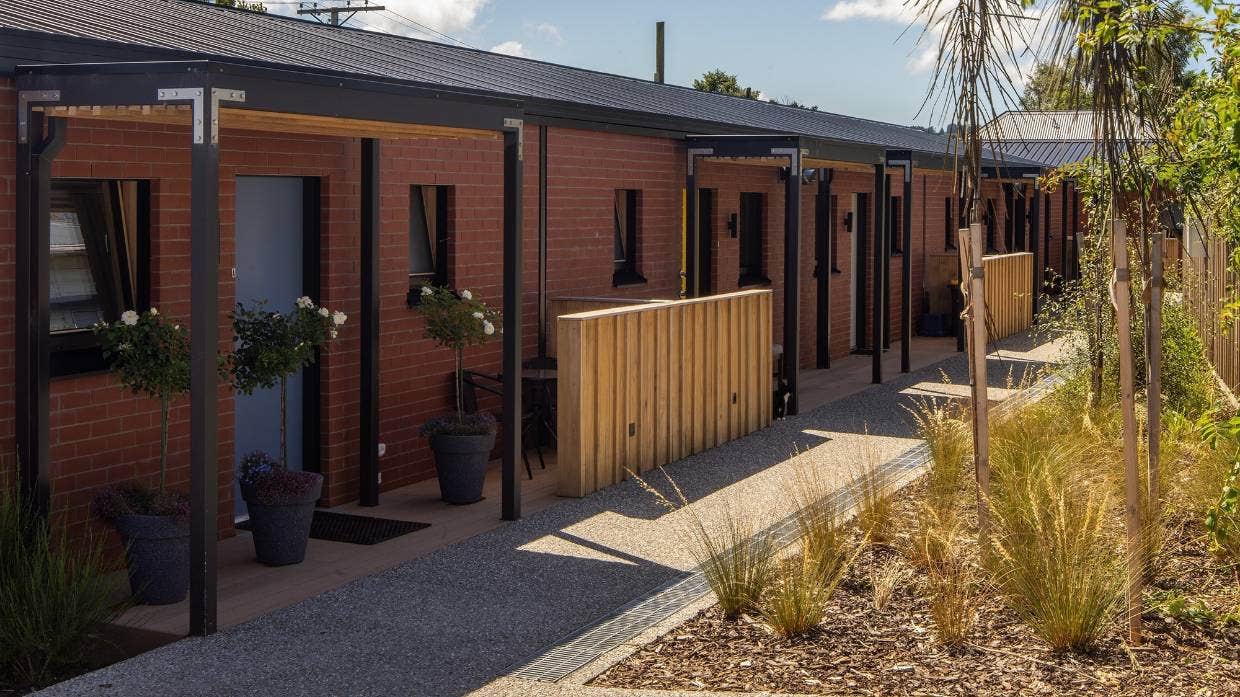
AirSuite is helping Dunedin City Council build powerful evidence for passive homes
Dunedin City Council is monitoring the energy efficiency and thermal performance of each of its passive house units in Kaikorai.
The data captured by their AirSuite monitors allows Dunedin City Council to make evidence-based decisions and direct resources to projects that work.

Delivering outcomes
Make equitable housing possible

We help identify where issues are coming from
Our sensors allow you to identify whether issues can be solved through tenant education, or if property improvements are required.

Monitoring made simple, no matter how many homes you’re managing
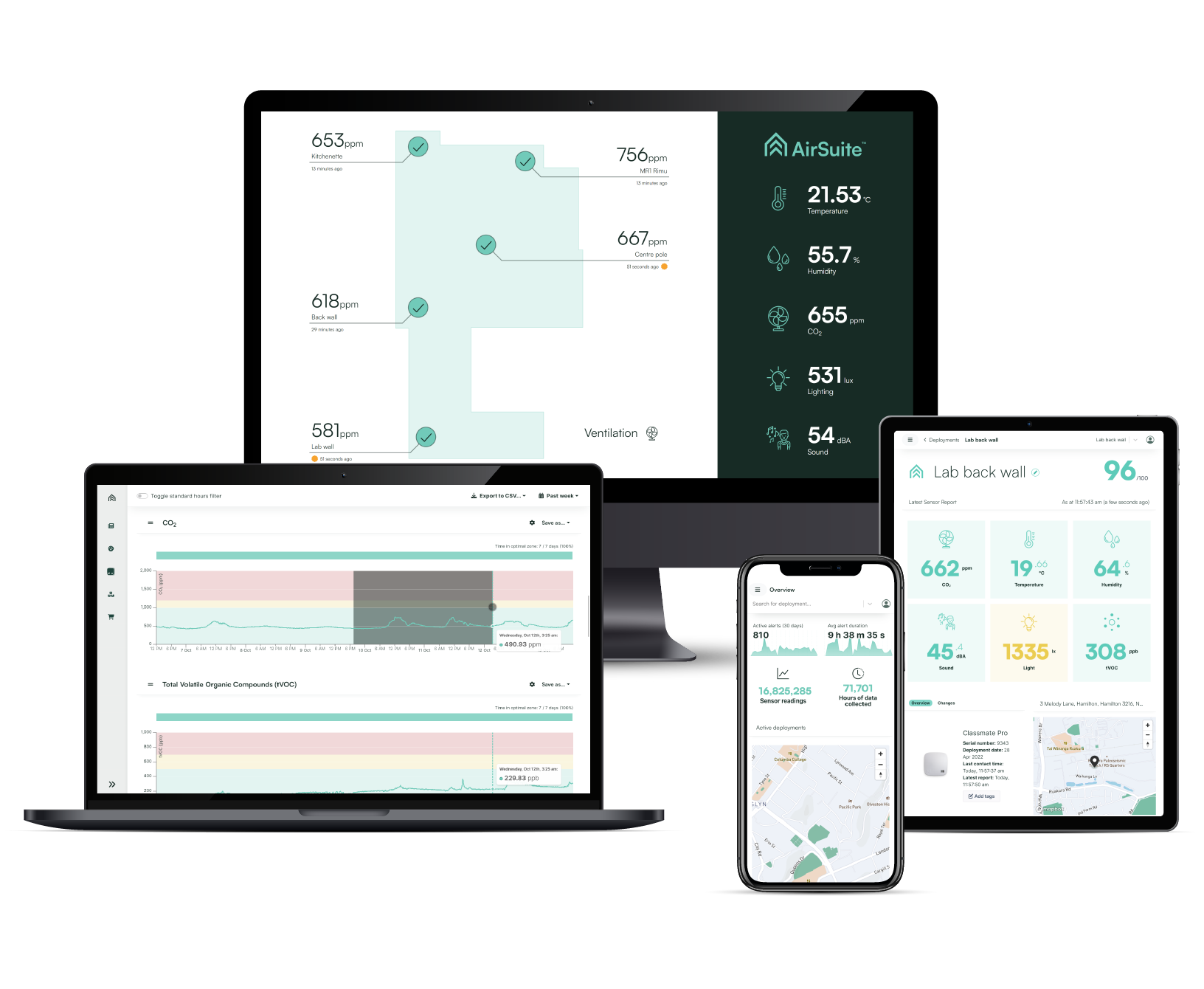
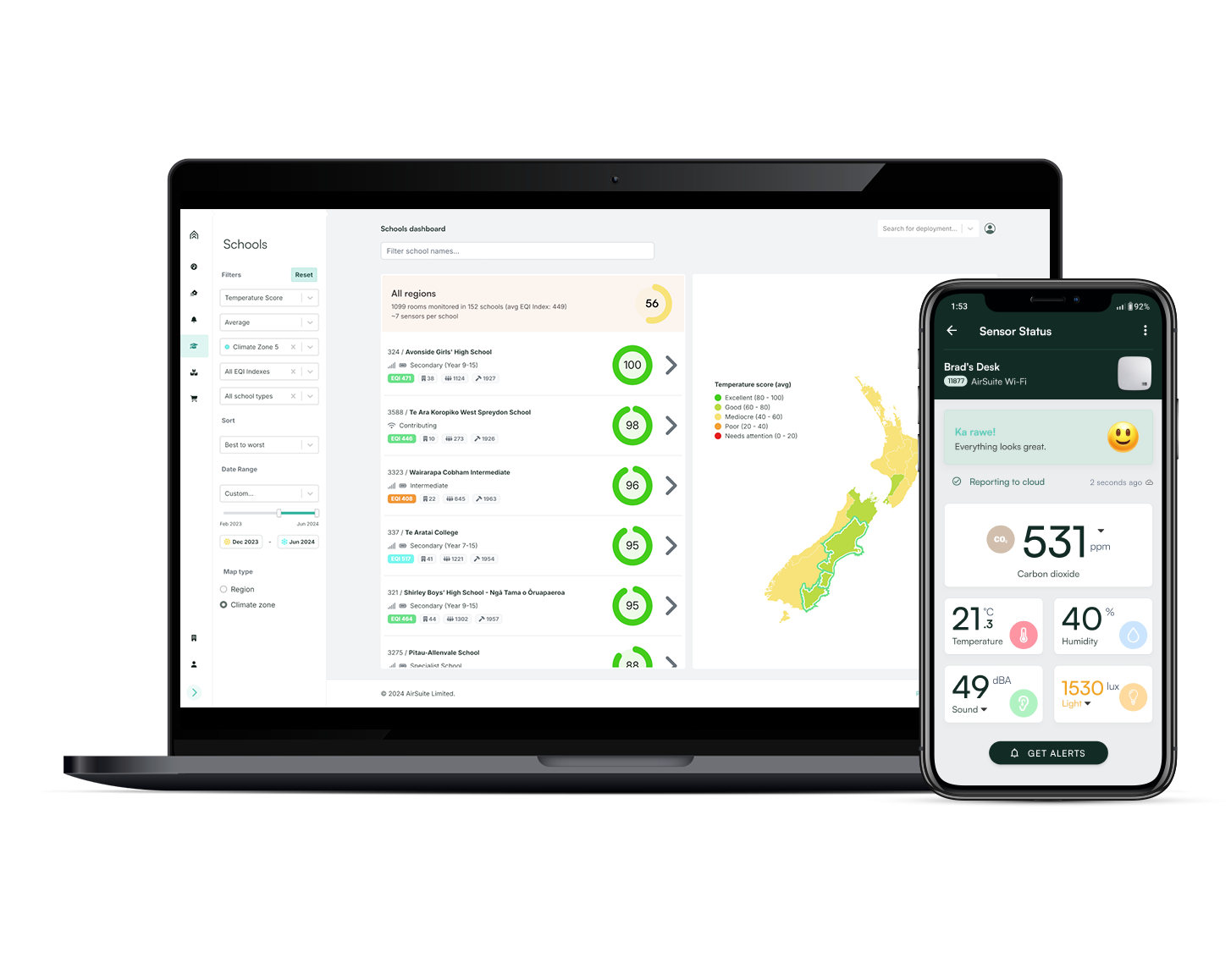
AirSuite Monitor Portal connects entire networks of sensors and presents their data in one easy-to-use interface, enabling you to find and prioritise issues.
We’re enabling both short-term and longer term environmental improvement
We’ve developed the tools to manage home conditions both in real-time and in the longer term with our AirSuite Monitor analysis and dashboarding software.
Key benefits
Unlock the benefits of smarter investment, more efficient buildings and healthier people
K’aute Pasifika case study
The data helps us to identify whether the issue is behavioural or structural. And whether I have to educate the families on how they can make changes to their living environment, or whether I need to speak to the landlord.
Dunedin City Council case study
We like the AirSuite Portal and the product range — it makes life easier. The sensors calibrate and update themselves. That’s an amazing feature and removes the requirement of sending them back to AirSuite.
The monitors in these homes
Choosing a monitor for a home
As Dunedin City Council’s Cem Akcaoglu put it, “you can choose a particular sensor for each project”. Housing programmes tend to land on one of two, and the deciding question is whether the household is meant to act on what it says.

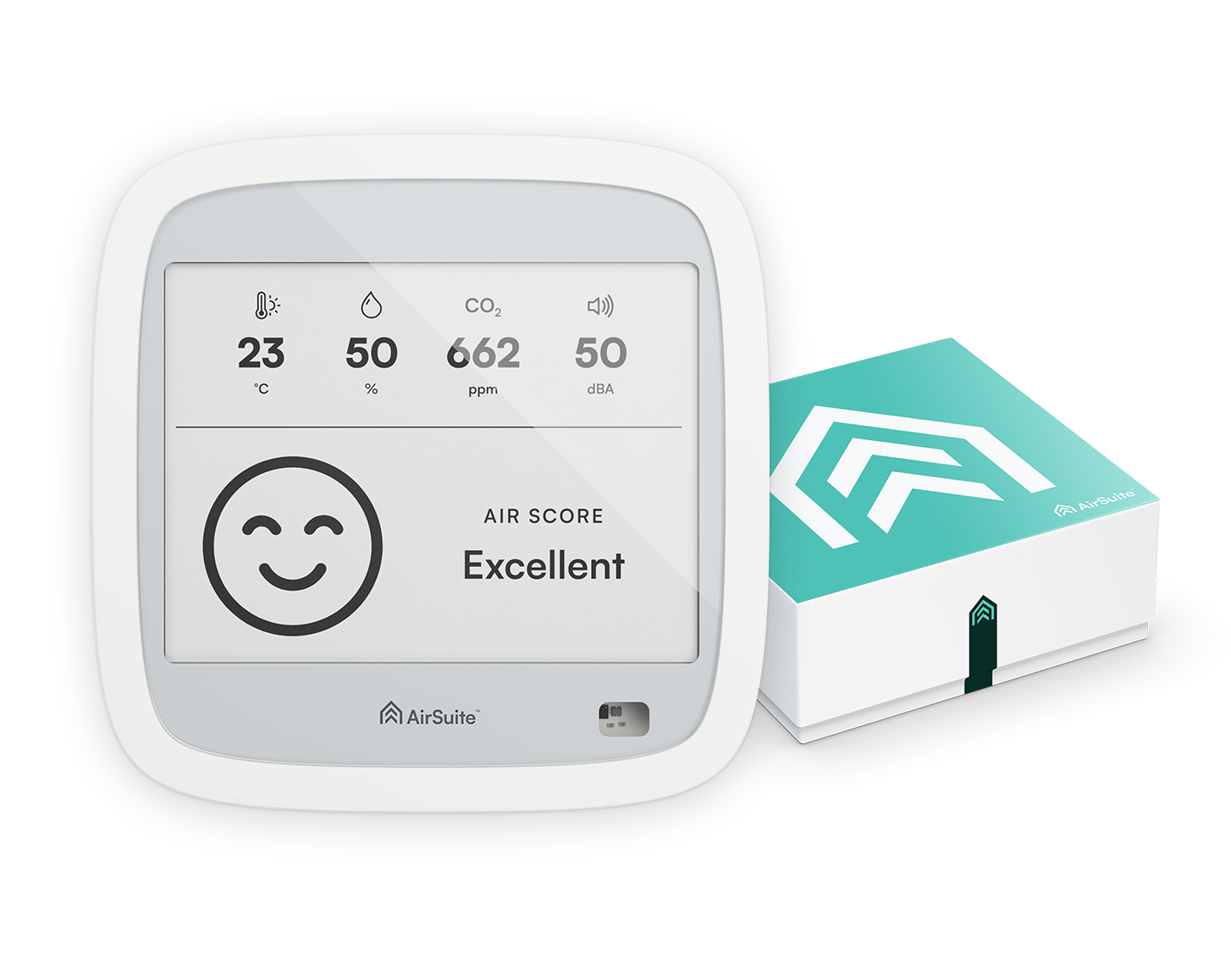
AirSuite Glance LTE
For programmes like K’aute Pasifika’s, where 150 monitors went two to a household — one in the main bedroom, one in the lounge — across 75 Waikato homes.
- 4G/LTE-M
- E-paper display
- Multi-year battery
- In-app alerts
Where the goal is changing how a home is lived in, the household needs to see what you see. Glance puts CO₂ and temperature on a built-in e-paper display, and the AirSuite app notifies the family when conditions fall outside recommended levels — which is what prompts someone to open a window, close the curtains or adjust the heating that evening rather than at the next home visit. K’aute Pasifika found those habits stuck long after the monitors left.
It reports over the cellular network, so it works in homes with no Wi-Fi and no spare power point, and installation takes three steps a support worker can do in a few minutes: explain it to the family, add it in the app, switch it on.
AirSuite Sense LTE
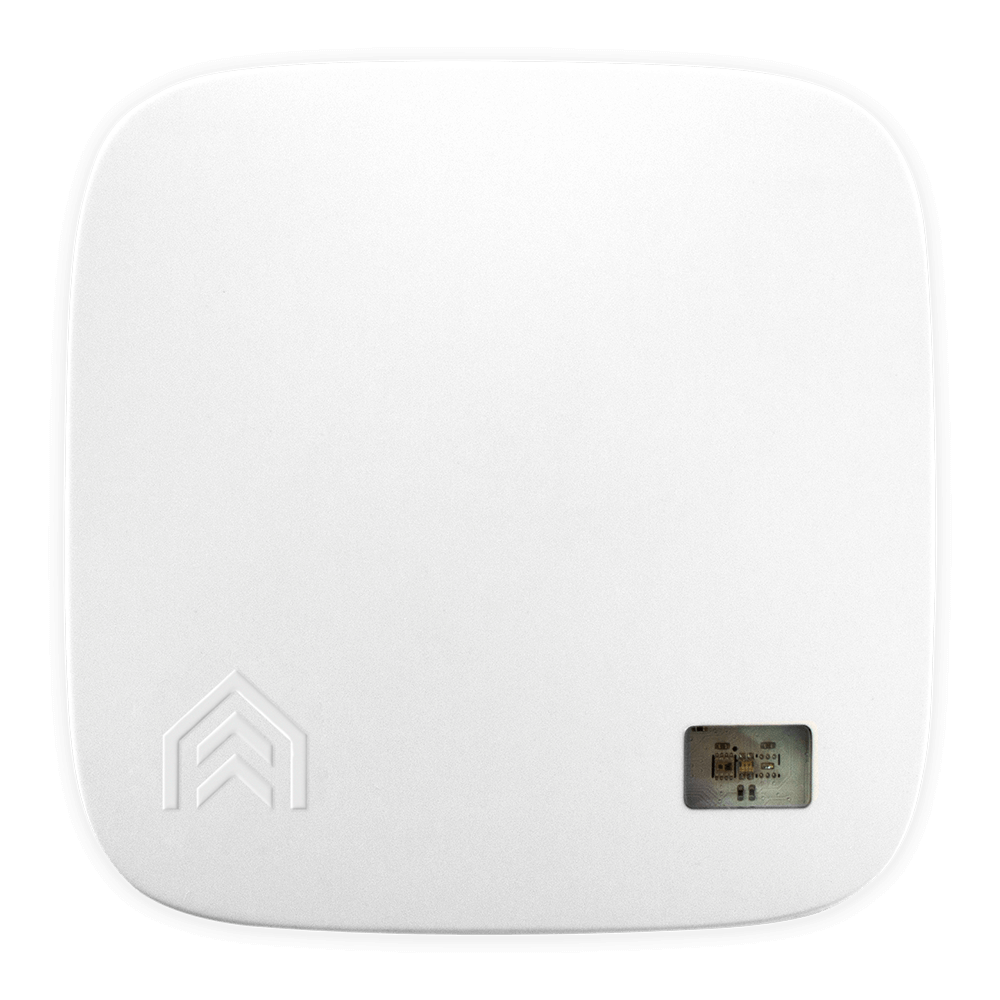
For measurement-led projects like Dunedin City Council’s, where eleven monitors — ten inside the School Street passive units and one fixed outside — track thermal performance through a winter.
- 4G/LTE-M
- No display
- Multi-year battery
- Self-calibrating
When the question is how a building performs rather than how it is used, a readout on the wall is a variable you do not want. Sense has no display, so tenants are not prompted to change their behaviour mid-study, and the record reflects the home rather than the experiment.
That is what makes it right for comparing passive-standard builds against standard stock: the same temperature, humidity and CO₂ measurements, taken the same way in every unit, held for long enough to cover a season. The monitors calibrate themselves, so nothing has to be pulled out of a tenanted home and posted back to us partway through.
See the full range of AirSuite monitors, sensors and add-ons
Questions
AirSuite for housing providers
How do monitors get installed in a tenanted home?
In three steps that take a few minutes and need no technical skill: explain to the household what is being installed and take their details, add the monitor and its location in the AirSuite mobile app, then switch it on. It reports to the cloud immediately.
Can this tell us whether a problem is structural or behavioural?
That distinction is one of the main reasons housing providers use AirSuite. Continuous temperature and humidity data shows whether a home is failing to hold heat and manage moisture regardless of how it is being used, or whether a change in heating and ventilation habits would resolve it.
Does it help in conversations with landlords?
Yes. Where an issue is structural, monitoring data supports a fact-based conversation, and a home’s performance can be set against other properties in the area — which tends to add useful incentive to act.
Do households need Wi-Fi or a power point?
Neither. Monitors connect over the cellular network and can run on a multi-year battery, so they work in homes without internet and in rooms without a spare socket.
Can families see their own data?
Yes. Through the AirSuite app a household can be notified when conditions in their home fall outside recommended levels, which supports the small day-to-day changes that often make the largest difference.
Is this useful for comparing new builds against existing stock?
It is a common use. Measuring energy and thermal performance across both passive-standard and standard homes in the same portfolio is how councils validate whether the additional build cost of a higher standard is returning what was expected.
Ready when you are
Let’s talk about how AirSuite™ can deliver real indoor outcomes for your organisation today